
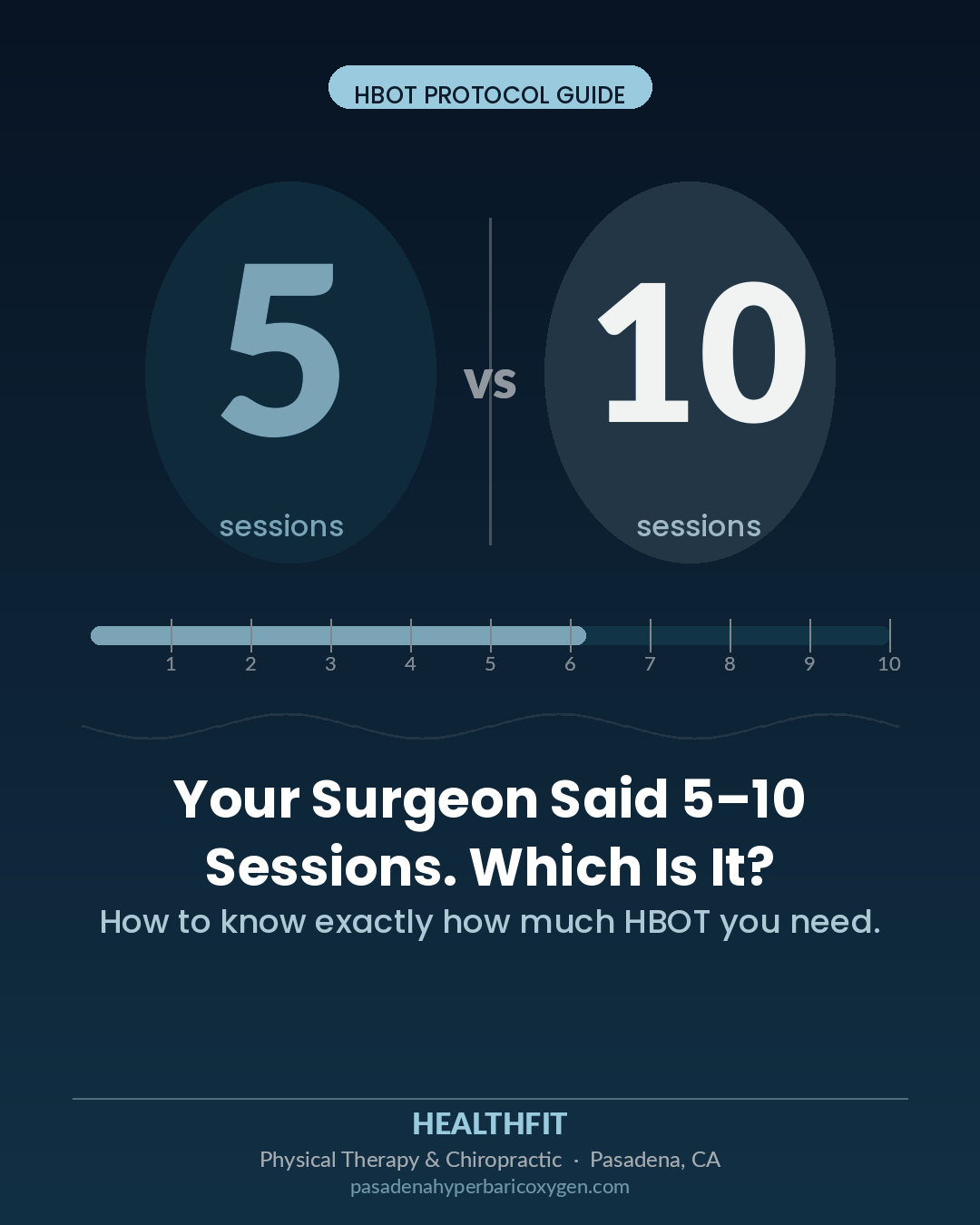
Your Surgeon Said 5 to 10 Sessions. So Which Is It? How to Know How Much HBOT You Actually Need After Surgery.
Your surgeon recommended 5 to 10 sessions of hyperbaric oxygen therapy—but which number is actually right for you? That range isn’t random, and understanding it can make a big difference in how you approach your recovery. Healing isn’t one-size-fits-all, especially after surgery where factors like procedure type, timing, and your body’s response all play a role. At HealthFit in Pasadena, we help patients use clinical-grade HBOT at 2.0 ATA to support recovery in a way that fits their specific situation. The goal isn’t just to follow a number—it’s to get the most out of your recovery. Knowing when to stop, when to continue, and what your body needs is key. Here’s how to figure out the right protocol for you.
Tummy Tuck or Lipo Recovery Is No Joke. Here's Why Clinical HBOT Is Becoming Part of the Protocol.
You just had a tummy tuck or liposuction, and while the surgery went well, the recovery is more intense than expected. Swelling, bruising, and limited movement can last for weeks, making it hard to feel like yourself again. That’s why more surgeons are now recommending hyperbaric oxygen therapy (HBOT) at 2.0 ATA to support post-surgical healing. At HealthFit in Pasadena, we work with body contouring patients using clinical-grade HBOT to help manage inflammation and improve recovery timelines. By increasing oxygen delivery to healing tissues, HBOT may help reduce swelling, support tissue repair, and improve how your body recovers during those first critical weeks. Not all hyperbaric chambers provide the same effect, and that detail matters more than most patients realize. Here’s what you need to know before getting started.
Had a Facelift or Brow Lift? Here's How 2.0 ATA Hyperbaric Oxygen Therapy Can Get You Back to Normal Faster
Your surgery went well—but right now, all you see is swelling and bruising staring back at you. Facial plastic surgery recovery is uniquely visible, and for many patients, that’s the hardest part. Unlike other procedures, there’s no way to hide the healing process when it’s on your face. At HealthFit in Pasadena, we work with post-facelift and brow lift patients using clinical-grade hyperbaric oxygen therapy (HBOT) to support recovery during this critical phase. By delivering oxygen at 2.0 ATA, HBOT may help reduce swelling, speed tissue repair, and improve how quickly you start to look like yourself again. Not all hyperbaric treatments are the same—and that difference matters. Here’s what you need to know before getting started.
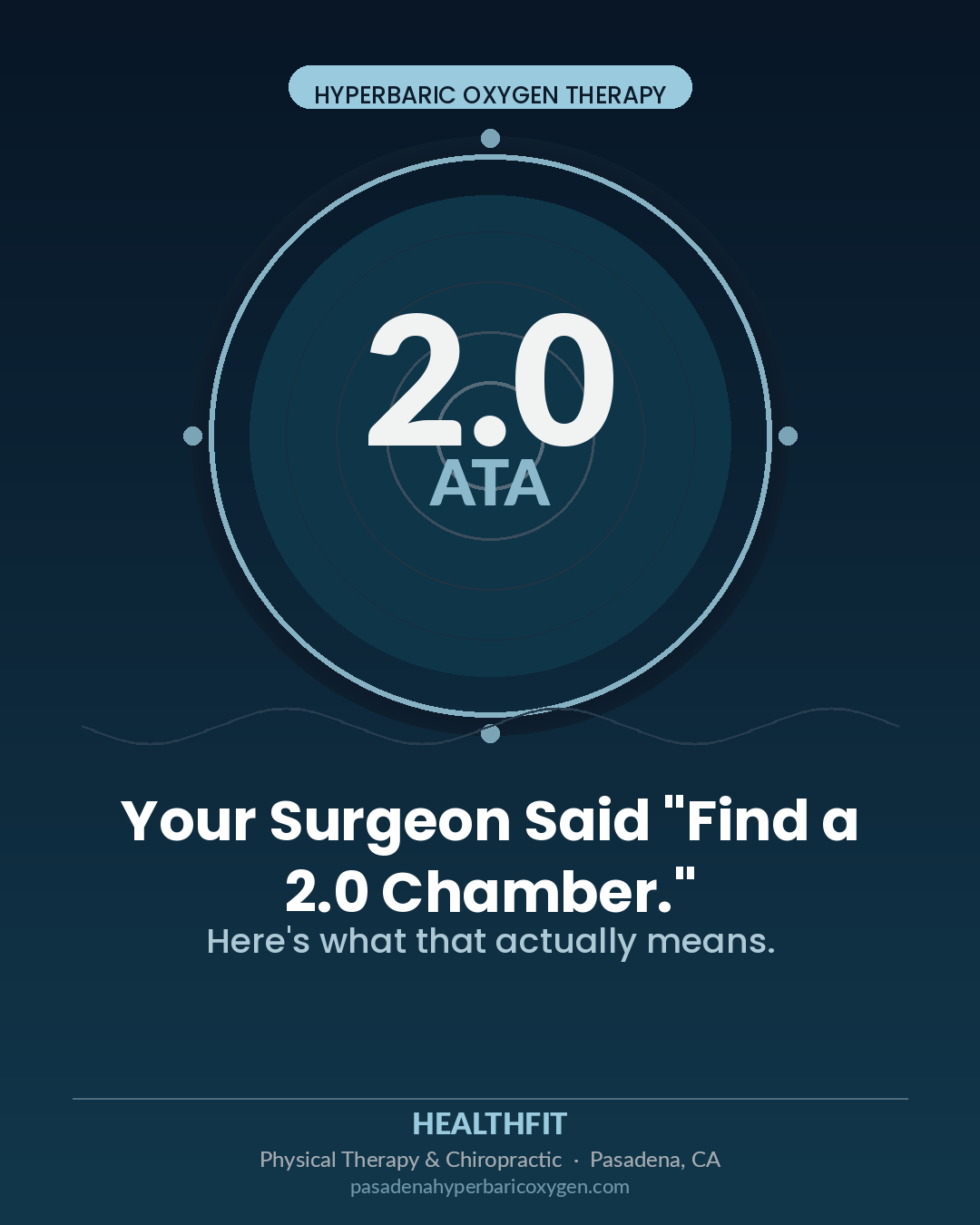
Your Surgeon Said "Find a 2.0 ATA Chamber." Here's What That Actually Means — and Where to Go in Pasadena.
You just had surgery, and your surgeon mentioned something specific: hyperbaric oxygen therapy at 2.0 ATA. Now you’re trying to figure out what that actually means—and why it matters. Not all hyperbaric chambers are the same, and that detail your surgeon gave you is more important than it seems. At HealthFit in Pasadena, we work with post-surgical patients every week using clinical-grade HBOT to support recovery. The difference between a soft chamber and a true 2.0 ATA chamber can directly impact how your body heals. Understanding that difference can help you make the right decision for your recovery. Here’s what you need to know before getting started.
Recovering From Breast Augmentation? Here's Why Your Surgeon May Have Mentioned Hyperbaric Oxygen — and What You Need to Know Before You Book
Just had breast augmentation and your surgeon mentioned hyperbaric oxygen therapy at 2.0 ATA? You’re probably wondering what that actually means—and whether it’s worth it. Recovery from surgery isn’t just about the incision healing; it’s about managing swelling, supporting tissue repair, and helping your body adapt to the changes. At HealthFit in Pasadena, we work with post-surgical patients using HBOT to support recovery during those critical first few weeks. By delivering oxygen under pressure, HBOT may help reduce swelling, support healing, and improve overall recovery timelines. But not all chambers are the same—and the difference matters. Here’s what you need to know before getting started.
Rhinoplasty Recovery Is Notoriously Slow. HBOT at 2.0 ATA Is Changing That — Here's What You Need to Know
Two weeks after rhinoplasty and still feeling swollen? You’re not alone—and yes, it’s completely normal. The nose heals differently than most parts of the body, which is why swelling and bruising can last for months, not weeks. But that doesn’t make the process any less frustrating, especially when you’re eager to see your results. At HealthFit in Pasadena, we’ve worked with many post-op patients using hyperbaric oxygen therapy (HBOT) to support recovery during this critical early phase. By increasing oxygen delivery to healing tissues, HBOT may help reduce swelling, improve circulation, and support a smoother recovery timeline. Here’s what you need to know before deciding if it’s right for you.